
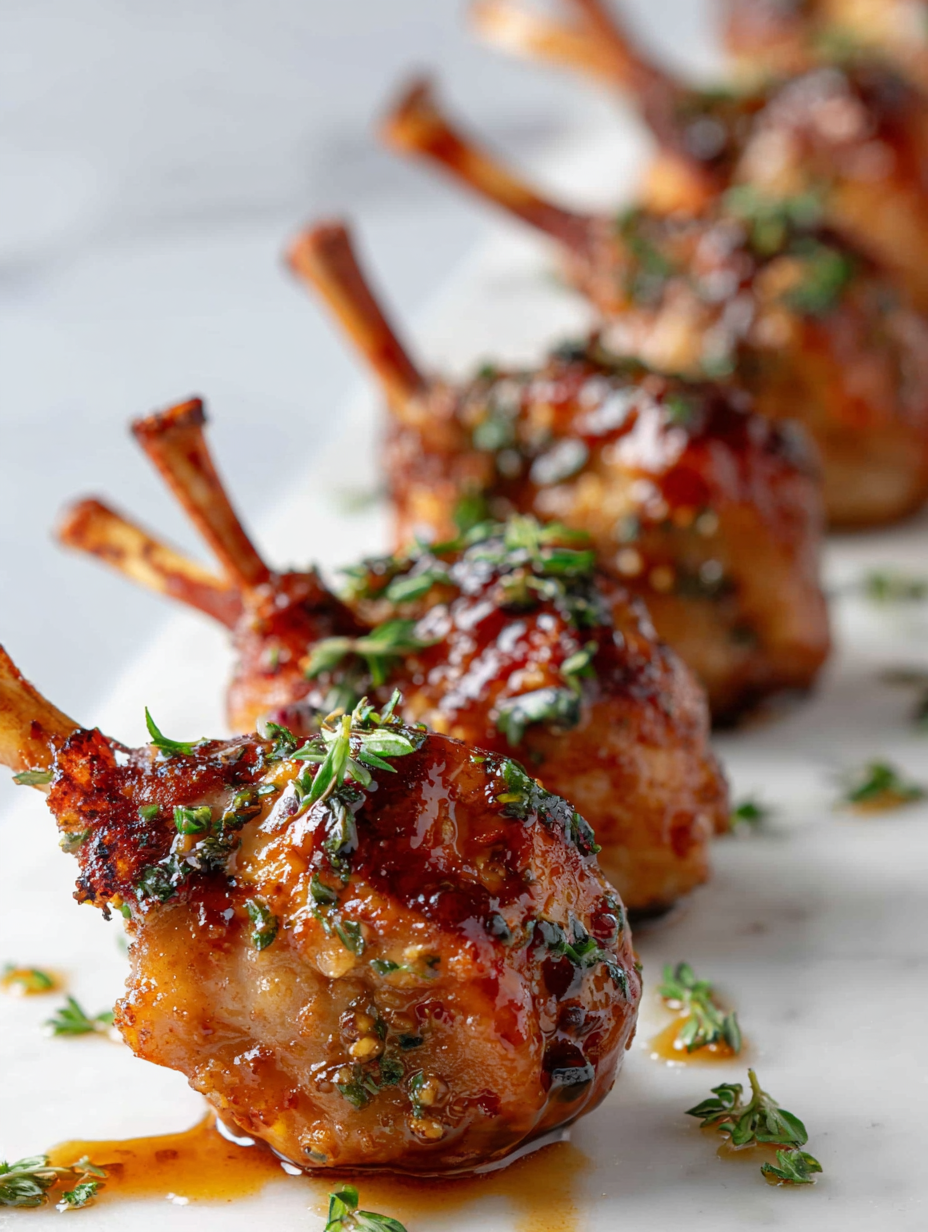
Making chicken lollipops is a bit like doing a small, messy sculpture at your kitchen table. There’s something satisfying about twisting the chicken drumettes into a neat, handle-ready shape—like tiny trophies of your own craft. It’s not perfect, and that’s part of the charm. Plus, the tactile process makes the whole cooking feel more playful, less like a chore.
I love how this recipe invites a bit of chaos and hands-on fun. It’s a break from the precision of usual cooking routines, encouraging you to get your fingers into the mix, coat each piece in spice, and shape each lollipop with care. The smell of seasoned chicken, sizzling and smoky, fills the air, making the whole house feel alive. It’s imperfect, messy, but deeply rewarding to see these little bites come together.
Focusing on the messy, hands-on fun of shaping chicken lollipops, this recipe embraces the tactile joy of cooking and the playful challenge of creating something both neat and rustic. It’s about reconnecting with the physical act of cooking, turning what feels like a chore into a small, satisfying craft.
Embracing the tactile joy of shaping
- Shaping these lollipops feels like tiny victories in my kitchen, a tactile reminder of cooking’s playful side.
- There’s a nostalgic thrill in coating each piece with spices—like reliving a childhood favorite snack.
- Getting my hands dirty with spice paste always sparks a sense of chaos and creativity, breaking the monotony.
- Seeing these little chicken sculptures come together makes me proud, even if they’re a bit rustic—because they’re mine.
- The smell of seasoned chicken sizzling fills the air, sparking a rush of anticipation and simple joy.
The story behind this recipe
- Crafting chicken lollipops is a bit like turning a simple drumstick into a playful, handheld snack—something I stumbled upon during a messy weekend of experimenting with finger foods. The tactile act of twisting and shaping chicken, then coating it in spices, makes the process feel more intimate and satisfying. It’s a reminder that sometimes, the best ideas come from just getting your hands dirty and playing around in the kitchen.
- This recipe grew out of my love for those little street snacks I’d grab on lazy evenings—crispy, spicy, and fun to eat. I wanted to recreate that joy at home, where I could tweak flavors and enjoy the messy process. It’s not about perfection but about feeling connected to the food as I work with it—shaping, seasoning, and sizzling away, all with a bit of chaos and a lot of flavor.
- heading: ‘The story behind this recipe’
Quick facts about chicken lollipops
- Chicken lollipops are believed to have originated from Chinese or Indian street snack traditions, where skewered and seasoned meats are served as finger foods.
- The playful shape of chicken lollipops makes them popular in modern fusion cuisine, often seen at casual parties and food trucks, blending street food vibe with home-cooked comfort.
- This dish gained popularity in the West through Asian-American eateries, turning a simple drumstick into a fun, shareable snack that’s perfect for finger-food platters.
Key ingredients and tips
- Chicken drumettes: I prefer these because their shape makes shaping into lollipops easier. Use skin-on for extra flavor, but skinless works if you want less mess.
- Spice paste: A quick mix of garlic, ginger, soy sauce, and a touch of honey—smells spicy and sweet. Adjust the garlic to your taste for more punch.
- Flour and cornstarch: The crispy coating starts here. I like a 1:1 ratio, but a little more cornstarch gives extra crunch—try it if you love crackly bites.
- Oil for frying: Use neutral oil like vegetable or canola. Keep the temp steady at about 180°C (350°F) for even crispiness, but watch out for splatters—use a splatter guard.
- Optional glaze: A sticky honey-soy glaze adds a smoky, sweet sheen. Brush on in the last minute of frying, and listen for that crackle of caramelizing sugar.
- Garnishes: Green onions, sesame seeds—fresh and bright. Sprinkle right after frying to keep that vibrant color and flavor—don’t skip this for a pop of freshness.
- Lollipop sticks: Wooden sticks or skewers—easy to handle and fun to eat. Soak them briefly if they’re untreated, to prevent burning during frying.
Spotlight on key ingredients
Chicken Drumettes:
- I prefer these for their shape and ease of shaping. Swap with chicken thighs if you want juicier meat, but expect less of that handheld, finger-food feel.
- Soy Sauce: Use tamari for a gluten-free option. It’s a bit richer and less salty, but still gives that umami punch, adding depth to the spice paste.
Coating ingredients:
- Honey: Maple syrup can replace honey for a different sweetness with a slight maple aroma, though it’s less sticky and more runny.
- Flour & Cornstarch: Rice flour or potato starch can be used instead. They create a different texture—less crackly, but still crispy, and help achieve that satisfying crunch.
Notes for ingredient swaps
- Chicken Drumettes: I prefer these for their shape and ease of shaping. Swap with chicken thighs if you want juicier meat, but expect less of that handheld, finger-food feel.
- Soy Sauce: Use tamari for a gluten-free option. It’s a bit richer and less salty, but still gives that umami punch.
- Honey: Maple syrup can replace honey for a different sweetness with a slight maple aroma, though it’s less sticky and more runny.
- Flour & Cornstarch: Rice flour or potato starch can be used instead. They create a different texture—less crackly, but still crispy.
- Oil: Avocado oil works well with its high smoke point, but neutral oils like vegetable or canola are most affordable and reliable for frying.
- Garnishes: Fresh cilantro instead of green onions offers a herbaceous brightness. Just sprinkle right after frying for a fresh hit.
- Lollipop Sticks: Bamboo skewers are a good eco-friendly choice, but soak them in water for 20 minutes to prevent burning during frying.
Equipment & Tools
- Sharp boning knife: For cleanly shaping the chicken drumettes into lollipops.
- Skewers or lollipop sticks: To handle and serve the shaped chicken easily.
- Mixing bowls: For preparing spice paste and coating mixtures.
- Deep-fryer or large pot: For frying the chicken evenly and safely.
- Slotted spoon: To carefully lower and lift chicken from hot oil.
Step-by-step guide to chicken lollipops
- Equipment & Tools: Gather a sharp boning knife (for clean cuts), skewers or lollipop sticks (for shaping), mixing bowls (for spice paste and coating), a deep-fryer or large pot (for frying), and a slotted spoon (for handling).
- Prepare the chicken: Pat drumettes dry with paper towels. Twist each drumette at the joint to separate the meat from the bone, then shape into a lollipop by pushing the meat down towards the bone end, creating a handle. Secure if needed with toothpicks, but I prefer just twisting and shaping.
- Make spice paste: Mix minced garlic, grated ginger, soy sauce, honey, and a pinch of salt in a bowl. Smell the spicy, sweet aroma—perfectly inviting. Adjust garlic or honey to taste.
- Coat the chicken: Dip each shaped drumette into the spice paste, ensuring an even coat. Then dredge in a mixture of flour and cornstarch (about 1:1 ratio). Tap off excess; the coating should be light but crackly.
- Heat the oil: Fill your deep-fryer or pot with enough neutral oil to submerge the chicken pieces—about 4 inches deep. Heat to 180°C (350°F). Use a thermometer for accuracy. When ready, a small piece of bread should sizzle and turn golden in 30 seconds.
- Fry the lollipops: Carefully lower the coated chicken into the hot oil using a slotted spoon or tongs. Fry in batches, avoiding overcrowding. Cook for 8-10 minutes, turning occasionally. They should turn a deep golden brown and smell fragrant—like toasted spice and crisp chicken.
- Check for doneness: The chicken should be crispy on the outside, and the internal temperature should read 75°C (165°F). The coating should crackle when pressed, and the meat should jiggle slightly but not be raw.
- Drain & rest: Remove from oil and drain on paper towels. Let rest for 2-3 minutes to settle and cool slightly. Finish with a brush of honey-soy glaze if desired. Scatter chopped green onions and sesame seeds for a fresh, smoky contrast.
- Plate and enjoy: Serve hot, with extra dipping sauce or as is. The crispy, spicy bites are best enjoyed immediately, with a slight crunch and smoky aroma lingering.
Let the chicken rest on paper towels for a couple of minutes. Brush with honey-soy glaze if desired. Serve immediately, garnished with green onions and sesame seeds for a fresh burst.
How to Know It’s Done
- Surface is deep golden and crispy, with a smoky aroma filling the air.
- Internal temp reaches 75°C (165°F), no pink meat remains.
- Coating crackles when pressed, indicating crispness.
Chicken Lollipops
Ingredients
Equipment
Method
- Gather your boning knife, skewers, mixing bowls, and a deep-fryer or large pot filled with oil heated to 180°C (350°F). Pat the drumettes dry thoroughly.
- Use the boning knife to twist each drumette at the joint, then gently push the meat down towards the bone to shape into a lollipop form. Secure with skewers or sticks if needed.
- In a bowl, mix minced garlic, grated ginger, soy sauce, and honey to create a fragrant spice paste. Smell the savory, sweet aroma and adjust ingredients if desired.
- Dip each shaped chicken into the spice paste, ensuring an even coating, then dredge in a mixture of flour and cornstarch, tapping off excess for a light, crackly surface.
- Carefully lower the coated chicken lollipops into the hot oil using a slotted spoon. Fry in batches, avoiding overcrowding, for about 8-10 minutes until deep golden brown and fragrant.
- Remove the fried chicken from the oil and drain on paper towels. Let rest for 2-3 minutes; if desired, brush with honey soy glaze for extra flavor and shine.
- Garnish with chopped green onions and sesame seeds for a fresh, savory finish. Serve immediately while crispy and aromatic.
Pro tips for perfect chicken lollipops
- Bolded mini-head: Use a breading mixture with cornstarch for extra crackle and crunch.
- Bolded mini-head: Keep oil temp steady at 180°C (350°F) for even frying and golden color.
- Bolded mini-head: Twist and shape each drumette into a lollipop while the meat is cold—firmer and easier to handle.
- Bolded mini-head: Dip chicken in spice paste, then dredge quickly to avoid clumpy coating—speed keeps it light.
- Bolded mini-head: Fry in small batches; overcrowding drops temp and results in soggy chicken.
- Bolded mini-head: Rest fried chicken on paper towels just a few minutes—this keeps the coating crispy and prevents sogginess.
- Bolded mini-head: Brush with a honey-soy glaze in the last minute—listen for that crackle and caramelization sound.
Common mistakes and how to fix them
- FORGOT to dry chicken; results in soggy coating—pat dry thoroughly before coating.
- DUMPED excess oil; causes splatter—use a splatter guard and fry in small batches.
- OVER-TORCHED coating; burns easily—maintain oil temperature at 180°C (350°F).
- MISSED resting; leads to soggy texture—let fried chicken rest on paper towels for 2 minutes.
Fast fixes for kitchen mishaps
- When oil shimmers, splash a tiny drop of water—if it crackles, it’s ready to fry.
- Splash a little vinegar in the oil to tame splatters and smell bright and sharp.
- Patch a soggy coating by increasing heat and frying a minute longer for extra crunch.
- Shield burnt spices with a paper towel—quickly lift the burnt bits before they taint the oil.
- If chicken sticks, rescue with a gentle shake of the pan and a quick reheat—the crackle returns.
Prep, store, and reheat tips
- You can shape the chicken lollipops a few hours ahead; keep them covered in the fridge to prevent drying out.
- Store fried chicken in an airtight container in the fridge for up to 2 days. Reheat in the oven at 180°C (350°F) until crispy, about 10 minutes, listening for that crisp crackle.
- The flavors deepen if you marinate the shaped chicken in the spice paste overnight—just keep it chilled and covered.
- Reheating the fried batch can sometimes soften the coating; reheating in a hot oven restores crispness better than the microwave.
- Avoid freezing cooked chicken lollipops, as the coating can lose its crunch and become soggy once thawed.
Top questions about chicken lollipops
1. How do I shape the chicken into lollipops?
Use fresh drumettes, pat them dry thoroughly before shaping to avoid soggy coating.
2. What’s the best frying temperature for crispy chicken lollipops?
Fry at 180°C (350°F) until golden and crispy, about 8-10 minutes, checking for internal temp of 75°C (165°F).
3. Can I use wooden skewers or sticks?
Yes, soaking sticks in water for 20 minutes prevents burning; soak before skewering the chicken.
4. How can I customize the spice flavor?
Adjust spice paste ingredients to your taste—more garlic for punch, honey for sweetness, soy for umami.
5. Why should I rest the chicken after frying?
Rest on paper towels for 2-3 minutes after frying; it keeps the coating crisp and absorbs excess oil.
6. How do I prevent sticking or sogginess during frying?
Use a slotted spoon to carefully lower chicken into hot oil and avoid overcrowding for even crispiness.
7. How do I know when my chicken lollipops are done?
The coating should crackle when pressed and turn a deep golden brown; internal temp confirms doneness.
8. How should I store and reheat leftovers?
Store leftovers in an airtight container in the fridge up to 2 days; reheat in oven for best crispness.
9. How can I prevent oil splatters?
If oil splatters, use a splatter guard and keep a gentle heat; avoid overcrowding the pan.
10. What’s a common mistake and how to fix it?
Overcooking can burn the coating; keep an eye on the color and smell, and adjust heat as needed.
There’s something satisfying about biting into a crispy, spicy chicken lollipop that’s been shaped and handled with care. These bites bring a playful, tactile element to the table, reminding me that cooking can be messy and fun all at once. Plus, they’re perfect for sharing during casual gatherings or just a lazy weekend night craving something bold.
In the end, it’s about enjoying the process—the smell of spice and sizzling chicken, the crackle of the coating, and that satisfying crunch. No matter how rustic or imperfect they look, these lollipops deliver flavor and fun with every bite. Sometimes, the messiest dishes turn out to be the most memorable.

Hi, I’m James Whitmore, the creator behind Salt Evangelist. If there is one ingredient I believe deserves more respect, it is salt. Not because it makes food salty, but because it makes food come alive. Salt highlights sweetness, softens bitterness, sharpens acidity, and deepens savoriness. It is not just seasoning. It is transformation.