
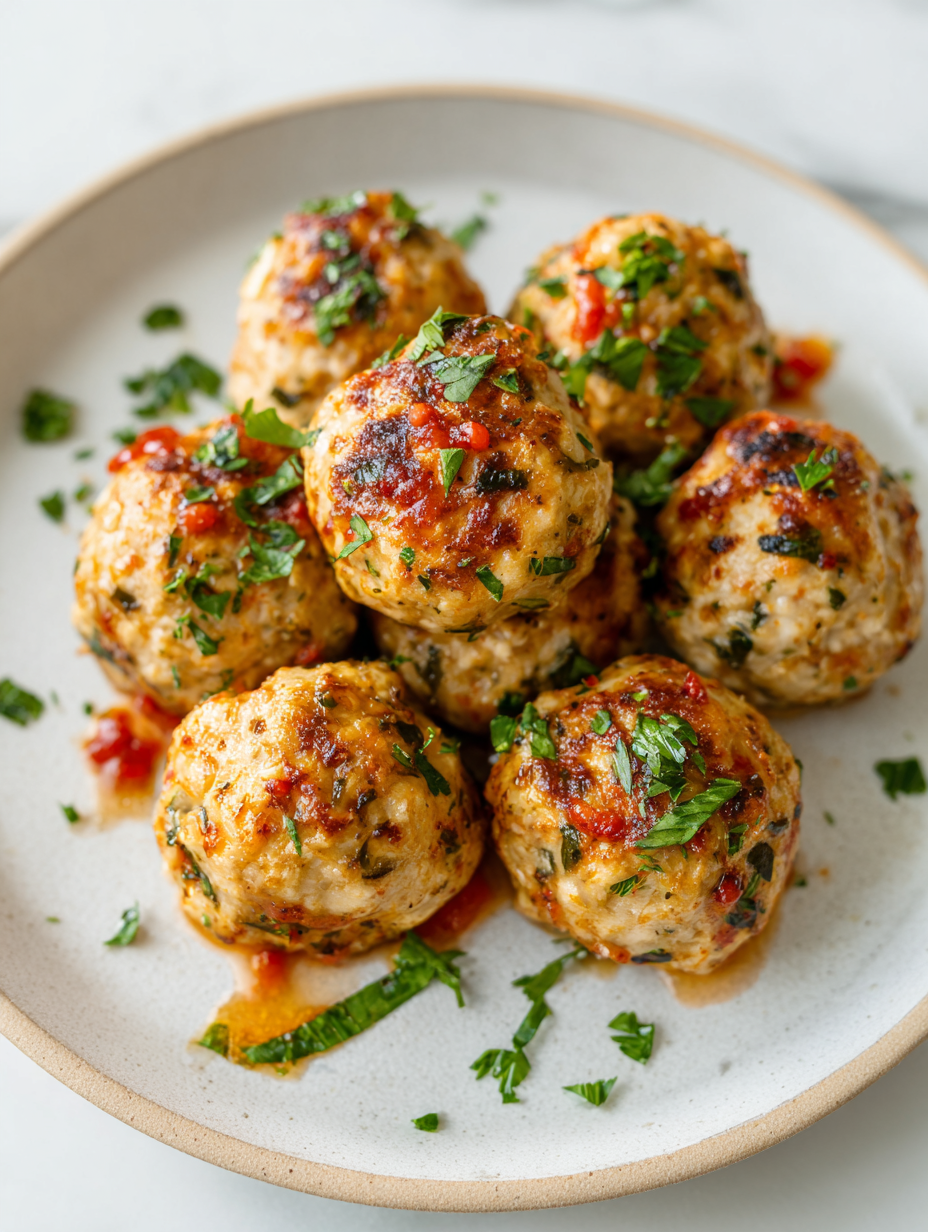
Baking chicken meatballs might sound simple, but it’s a game of patience and gentle heat. The oven’s even warmth ensures each meatball is tender inside with a light, crispy edge that you just can’t get from frying. It’s my go-to method when I want flavor without the splatter or fuss.
There’s something satisfying about knowing these are cooked through without the risk of overdoing it in a pan. Plus, baking means I can load up a tray and walk away — no constant turning, no frantic checking. It’s a quiet, almost meditative way to get dinner on the table with less mess and more flavor.
This recipe focuses on baking chicken meatballs to achieve a tender, evenly cooked interior with a subtly crisp exterior, avoiding the mess and fuss of frying. It’s about harnessing the oven’s gentle heat to develop flavor and texture, making it perfect for busy weeknights or prepping for a crowd without sacrificing quality.
Personal inspiration behind these meatballs
- This recipe came from a moment of frustration — I was juggling dinner prep and realized I needed a foolproof way to get juicy, evenly cooked meatballs without the mess of frying. Baking offered a gentle, predictable heat that let me focus on flavor and texture, not constant flipping. It’s become a quiet staple in my weekly routine, especially when I want something hearty but simple.
- I remember the first time I baked these for friends — the smell of garlic and herbs filling the kitchen, everyone’s eyes widening at how perfectly tender they were. Since then, I’ve tweaked the seasoning and added a little lemon zest, making them brighter and more inviting. It’s funny how small changes can turn a basic dish into a comforting, memorable moment.
- heading: ‘The story behind this recipe’
Key Ingredients Breakdown
- Ground chicken: I like my chicken to be fresh and slightly lean, but if you want juicier meatballs, add a little grated zucchini or a splash of chicken broth. The aroma of raw chicken should be mild, not overpowering.
- Breadcrumbs: I prefer panko for a lighter, crunchier texture, but regular breadcrumbs work fine. Soak them briefly in milk if you want extra softness inside the meatballs.
- Garlic: I crush fresh garlic just before mixing — the pungent aroma wakes up the whole dish. If you’re sensitive, use half or roast it first for a mellow, nutty flavor.
- Egg: I use a large egg to bind everything together. If your mixture feels too loose, add a little more breadcrumbs; if too firm, a splash of water or milk helps loosen it up.
- Herbs and seasoning: My go-to is chopped parsley and a pinch of smoked paprika. Fresh herbs brighten the flavor, and smoked paprika adds a subtle smoky undertone that complements the chicken’s mildness.
- Olive oil: For baking, I lightly brush the meatballs with olive oil — it encourages even browning and adds a gentle fruity aroma. Skip this if you’re trying to cut back on fat, but expect a paler finish.
- Lemon zest: A touch of lemon zest brightens the flavor and adds a fresh zing. I often sprinkle it right before baking, so the scent is vibrant and clean.
Spotlight on key ingredients
Ground chicken:
- I prefer fresh, slightly lean, but adding grated zucchini keeps these juicy. The raw smell should be mild, not pungent.
- Breadcrumbs: I opt for panko for crispness, but regular crumbs work. Soaking them in a splash of milk makes for softer meatballs.
Garlic and Lemon Zest:
- Garlic: I crush fresh garlic just before mixing — it releases a pungent aroma that wakes up the dish. Roasting mellows it into a nutty note.
- Lemon zest: Brightens the flavor and adds a fresh zing, especially when sprinkled on before baking for a vibrant scent.
Notes for ingredient swaps
- Dairy-Free: Use almond meal instead of breadcrumbs for a nutty flavor and a softer bite.
- Low-Sodium: Swap regular salt for herbs like thyme or oregano to boost flavor without extra salt.
- Gluten-Free: Replace panko with crushed gluten-free crackers or almond flour for a lighter, nutty note.
- Vegan: Use blended oats or cooked lentils in place of chicken, and nutritional yeast instead of egg for binding.
- Herb Variations: Swap parsley for chopped cilantro or basil to change the fresh flavor profile.
- Garlic Flavor: Roast garlic first for a mellow, caramelized sweetness or omit for a subtler aroma.
- Lemon Zest: Omit or replace with a dash of sumac for a tangy, smoky twist.
Equipment & Tools
- Baking sheet: To hold the meatballs during baking.
- Mixing bowl: To combine all ingredients evenly.
- Scoop or spoon: For portioning uniform-sized meatballs.
- Parchment paper or silicone mat: To prevent sticking and facilitate cleanup.
- Brush or spray: To lightly coat meatballs with oil for browning.
Step-by-step guide to baked chicken meatballs
- Preheat your oven to 200°C (390°F). Line a baking sheet with parchment paper or a silicone mat for easy cleanup.
- Gather your equipment: a mixing bowl for the meat, a scoop or spoon for portioning, and a baking sheet. A small brush for oil is optional.
- In your mixing bowl, combine 1 pound ground chicken, 1/2 cup panko breadcrumbs, 2 minced garlic cloves, 1 beaten large egg, 2 tablespoons chopped parsley, 1 teaspoon smoked paprika, and 1 teaspoon lemon zest.
- Mix everything gently but thoroughly. Be careful not to overwork — overmixing can make the meatballs dense.
- Scoop out about 1 1/2 inches of mixture, roll into balls about the size of a golf ball, and place on the prepared baking sheet, spacing them evenly.
- Lightly brush the meatballs with olive oil or spray with cooking spray to encourage browning. This step is optional but helps develop a nice crust.
- Bake in the preheated oven for 20–25 minutes, or until the meatballs are golden brown and cooked through. You can check after 20 minutes; they should be firm but tender.
- For checkpoints: the meatballs should be evenly browned, smell fragrant with garlic and herbs, and feel firm but not hard when gently pressed.
- Once done, remove from oven and let rest for 5 minutes. This helps the juices redistribute, keeping them moist.
- Serve hot, garnished with extra parsley or lemon wedges for a bright finish. Pair with pasta, salad, or crusty bread.
Let the meatballs rest for 5 minutes on a plate to retain juices. Serve immediately or cool completely before storing.
How to Know It’s Done
- Color: golden brown exterior with slight crispness.
- Smell: fragrant garlic, herbs, and cooked chicken aroma.
- Texture: firm but tender, with a slight bounce when pressed.
Baked Chicken Meatballs
Ingredients
Equipment
Method
- Preheat your oven to 200°C (390°F) and line a baking sheet with parchment paper or a silicone mat. This ensures easy cleanup and prevents sticking.
- In a large mixing bowl, combine the ground chicken with panko breadcrumbs, minced garlic, beaten egg, chopped parsley, smoked paprika, and lemon zest. Gently mix everything together until just combined—be careful not to overmix, as this can make the meatballs dense.
- Using a scoop or spoon, portion out about 1 1/2-inch pieces of the mixture and roll each into a smooth ball with your hands. Place the meatballs evenly spaced on the prepared baking sheet.
- Lightly brush the tops of the meatballs with olive oil or spray them with cooking spray. This helps them develop a golden, crispy exterior as they bake.
- Bake the meatballs in the preheated oven for 20–25 minutes, or until they are golden brown and cooked through. You’ll hear a gentle sizzle and see a nice crispness forming on the outside.
- Remove the meatballs from the oven and let them rest for about 5 minutes. This step helps the juices redistribute, keeping them moist and tender inside.
- Serve the meatballs hot, garnished with extra parsley or lemon wedges. They pair beautifully with pasta, salad, or crusty bread for a satisfying meal.
Notes
Pro tips for perfect baked meatballs
- Use a light hand when mixing — overworking the meat can make the meatballs tough.
- Chill your mixture for at least 15 minutes before shaping — it helps everything hold together.
- For even cooking, space your meatballs well on the baking sheet — avoid overcrowding.
- Brush with olive oil before baking for a golden, crispy exterior that’s not greasy.
- Check for doneness at 20 minutes — they should be golden and firm, not jiggle in the center.
- Rest the meatballs for 5 minutes after baking — this keeps them juicy when served.
- If they brown too quickly, loosely tent with foil — prevents burning while cooking through.
Common mistakes and how to fix them
- TOO LITTLE OIL: Ditching oil causes dry meatballs; add a brush of oil for browning.
- OVERBAKING: Excess time dries out meatballs; set a timer and watch for golden edges.
- IGNORING TEMP: Not checking internal temp risks undercooked chicken; aim for 75°C (165°F).
- SKIPPING REST: Cutting into hot meatballs loses juices; rest for 5 minutes before serving.
Quick fixes and pantry swaps
- When meatballs crack open, splash a little water into the oven to create steam.
- If meatballs are dry, patch with a brush of olive oil before baking again.
- Dumped too much seasoning? Rinse briefly and pat dry with paper towels to salvage.
- Over-torched bottoms? Shield them with foil and lower the oven temperature slightly.
- heading
Prep, store, and reheat tips
- You can prepare the meatball mixture up to 24 hours ahead; keep it covered in the fridge to let flavors meld and develop. The raw aroma should remain fresh, not sour.
- Shape the meatballs and arrange on a tray. Cover tightly with plastic wrap and refrigerate for up to 24 hours before baking. They should stay firm, with no excess moisture pooling around.
- Cooked meatballs will keep well in an airtight container in the fridge for 3 days, retaining their tender texture and savory aroma. Reheat gently to preserve juiciness.
- For longer storage, freeze cooked or raw meatballs for up to 3 months. Thaw in the fridge overnight, then reheat until steaming hot, with a slight crackle on the exterior.
Top questions about baked chicken meatballs
1. How do I know when the meatballs are done?
Look for an internal temperature of 75°C (165°F) to ensure they’re fully cooked and safe to eat.
2. Can I bake frozen meatballs?
Yes, you can bake them from frozen. Add extra 5-10 minutes to the baking time, and ensure they reach 75°C (165°F).
3. Can I use dried herbs instead of fresh?
Using fresh herbs gives a brighter flavor, but dried herbs work in a pinch—just use about a third of the amount.
4. Why are my meatballs dry?
If they seem too dry, try adding a splash of chicken broth or a little grated zucchini to the mixture next time.
5. How can I keep the meatballs from falling apart?
Pre-shaping and chilling the meat mixture helps them hold their shape during baking, preventing spreading or falling apart.
6. What oven temperature is best for baking meatballs?
Baking at 200°C (390°F) gives a nice balance of browning and tenderness without drying out the meat.
7. Can I freeze baked meatballs?
Yes, you can freeze raw meatballs on a tray, then transfer to a bag. Bake directly from frozen, adding a few minutes.
8. Should I brush the meatballs with oil before baking?
Lightly brushing with olive oil before baking promotes browning and adds flavor, but skip if you want fewer calories.
9. Why should I rest the meatballs after baking?
Letting the meatballs rest for a few minutes after baking helps lock in juices, making them more tender.
10. Can I substitute panko with regular breadcrumbs?
Using panko breadcrumbs keeps the meatballs lighter and crunchier. Regular breadcrumbs are fine, but may be slightly denser.
Making these baked chicken meatballs is a small act of kindness in the kitchen. The aroma of garlic and herbs filling the air, the satisfying crackle as they bake, it all reminds me that good, honest food doesn’t need fuss. Sometimes, simplicity lets the flavors really shine, especially on busy nights when flavor matters most.
In the end, it’s about the little details — a sprinkle of lemon zest, a brush of olive oil — that turn a simple dish into something memorable. These meatballs aren’t just about filling bellies; they’re about the quiet moments of cooking that make the day a little brighter.

Hi, I’m James Whitmore, the creator behind Salt Evangelist. If there is one ingredient I believe deserves more respect, it is salt. Not because it makes food salty, but because it makes food come alive. Salt highlights sweetness, softens bitterness, sharpens acidity, and deepens savoriness. It is not just seasoning. It is transformation.