
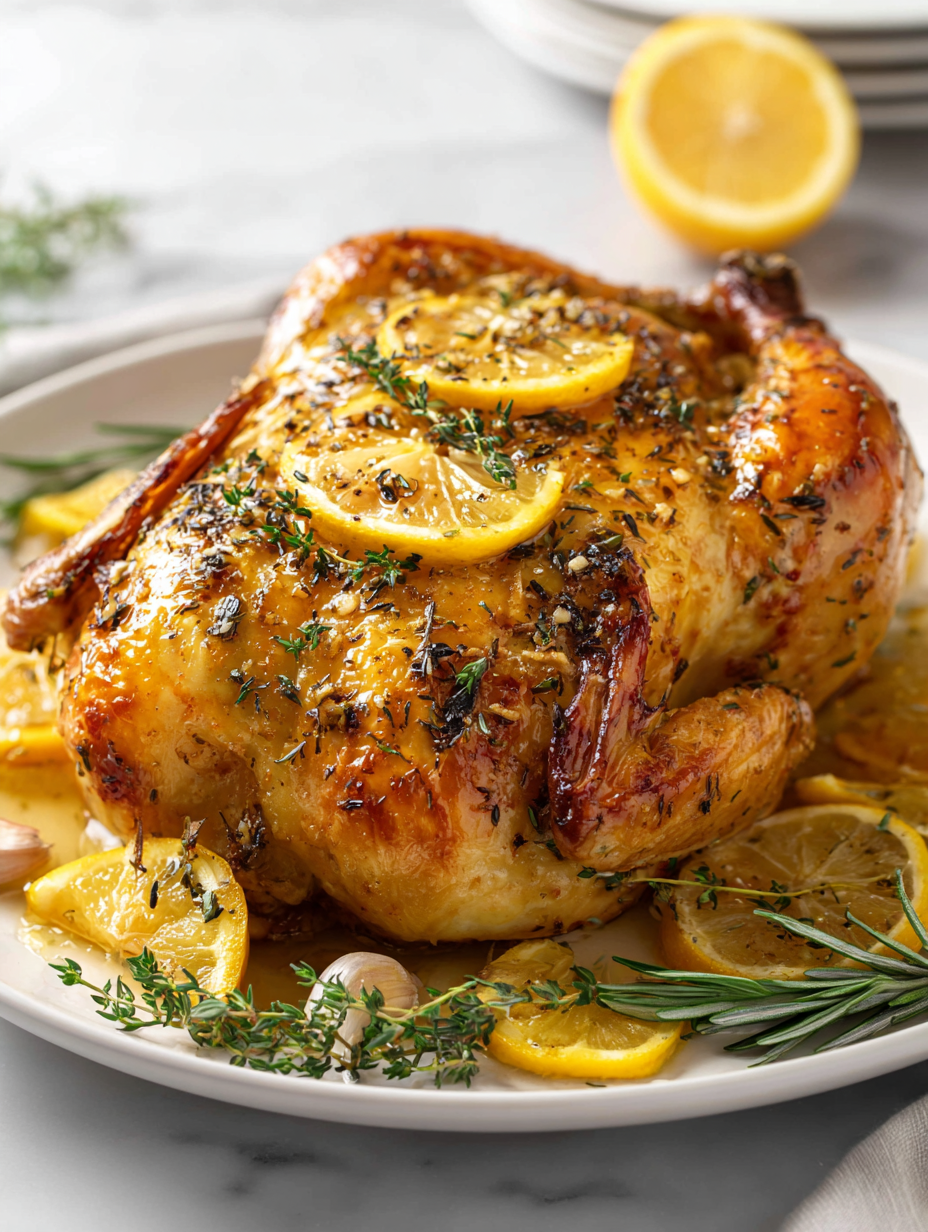
This roast chicken with lemon and herbs isn’t just about the main event; it’s about the dance of flavors that happen when bright citrus meets earthy greens. The lemon slices sit nestled under the skin, releasing their zing slowly as the chicken roasts, filling your kitchen with a fresh, almost tangy aroma that’s as lively as it is comforting.
What I love about this recipe is how it transforms a humble roast into a sensory experience. The herbs—rosemary, thyme, maybe a bit of sage—bring a woody, aromatic depth that balances the sharpness of the lemon. It’s simple, honest cooking that highlights how fresh ingredients can turn a basic chicken into something memorable, almost celebratory.
This dish feels like a little celebration in the middle of a busy week. The citrus brightens your senses, cutting through the richness of the roasted chicken, making every bite feel like a little escape. It’s honest food, meant to be enjoyed without fuss but with a real sense of care and intention.
Focusing on how the lemon and herbs create a dynamic flavor contrast, balancing bright acidity with earthy aromatics, transforming everyday roast chicken into a lively, sensory experience that elevates simple ingredients.
A Citrus-Infused Roast
- This recipe always reminds me of Sunday afternoons at my grandparents’ house, where the aroma of herbs and lemon filled the air, making everything feel cozy and special.
- There was a night I cooked this for a small dinner party, and watching my friends’ faces light up with every bite made me realize how simple ingredients can create real joy.
- Cooking this dish feels like a small act of self-care, a way to pause and enjoy the bright, fresh flavors that lift my spirits during busy weeks.
- I love how the lemon’s zing cuts through the richness of the chicken, making each bite lively and unexpectedly satisfying, even on a hectic weekday.
A Citrus-Infused Roast
This recipe was born out of a simple craving for bright, fresh flavors that could turn a humble roast into something special. I remember the first time I squeezed lemon over a whole chicken and how the zing seemed to awaken all the savory notes. Since then, it’s become a go-to for those evenings when I want comfort with a little extra sparkle. The herbs and citrus together remind me of lazy Sunday afternoons, where the kitchen smells like a garden in full bloom, and everything feels just right.
Historical & Cultural Tidbits
- This dish traces back to rustic French and Mediterranean kitchens where citrus and herbs were used to brighten and preserve poultry.
- Lemon’s role in roasting poultry became popular in Europe during the Middle Ages, thanks to its ability to tenderize and add flavor.
- Ancient Romans often stuffed chickens with herbs and citrus, a tradition that influences modern recipes today.
- The combination of lemon and herbs in roast chicken reflects a long history of using fresh, bright ingredients to elevate simple fare.
Ingredient breakdown: key components
- Lemon: I always use fresh, juicy lemons—nothing beats that bright, zingy aroma and flavor that seeps into the chicken. Swap with lime if you want a slightly different tang, but fresh citrus is key.
- Herbs: Rosemary, thyme, and sage are my go-to. They release their earthy, piney notes as they roast, filling the air with a nostalgic aroma. Feel free to mix in parsley or oregano for a different herbal punch.
- Garlic: I crush a few cloves and tuck them under the skin. It mellows out during roasting, giving a mellow, savory depth. Skip if you’re sensitive to garlic’s pungency, but it’s worth the aroma.
- Olive oil: Good-quality extra virgin is my choice—its fruity richness helps crisp the skin and carries the herbs. If you prefer a lighter option, a neutral oil works, but the flavor won’t be as vibrant.
- Salt: I use coarse sea salt for that satisfying crunch and seasoning. Adjust to taste, but don’t skimp—salt is what makes all the other flavors pop.
- Pepper: Freshly cracked black pepper adds a subtle heat and complexity. I sprinkle generously—don’t be shy—it’s what rounds out the flavor.
- Lemon slices: I nestle thin slices under the skin and around the cavity, releasing their citrus oils slowly. Oozing lemon juice brightens every bite, so don’t skip them.
Spotlight on key ingredients
Lemon:
- I always use fresh, juicy lemons—nothing beats that bright, zingy aroma and flavor that seeps into the chicken. Swap with lime if you want a slightly different tang, but fresh citrus is key.
- Herbs: Rosemary, thyme, and sage are my go-to. They release their earthy, piney notes as they roast, filling the air with a nostalgic aroma. Feel free to mix in parsley or oregano for a different herbal punch.
Herbs:
- Rosemary, thyme, and sage are my favorites. They infuse the chicken with earthy, aromatic notes that deepen as they roast, creating a fragrant layer that balances the citrus brightness.
- During roasting, they release essential oils that fill your kitchen with a piney, woody scent. Keep some fresh sprigs nearby for a vibrant, herbal burst at the end.
Notes for ingredient swaps
- Lemon: I prefer fresh, juicy lemons—nothing beats that bright, zingy aroma and flavor. Swap with lime if you want a slightly different tang, but fresh citrus is key.
- Herbs: Rosemary, thyme, and sage are my go-to. They release earthy, piney notes as they roast, filling the air with a nostalgic aroma. Feel free to mix in parsley or oregano for a different herbal punch.
- Garlic: I crush a few cloves and tuck them under the skin. It mellows out during roasting, giving a mellow, savory depth. Skip if you’re sensitive to garlic’s pungency, but it’s worth the aroma.
- Olive oil: Good-quality extra virgin is my choice—its fruity richness helps crisp the skin and carries the herbs. If you prefer a lighter option, a neutral oil works, but the flavor won’t be as vibrant.
- Salt: I use coarse sea salt for that satisfying crunch and seasoning. Adjust to taste, but don’t skimp—salt is what makes all the other flavors pop.
- Pepper: Freshly cracked black pepper adds a subtle heat and complexity. I sprinkle generously—don’t be shy—it’s what rounds out the flavor.
- Lemon slices: I nestle thin slices under the skin and around the cavity, releasing their citrus oils slowly. Oozing lemon juice brightens every bite, so don’t skip them.
Equipment & Tools
- Oven: To roast the chicken evenly at precise temperatures.
- Roasting pan or cast-iron skillet: To hold the chicken during roasting and collect drippings.
- Kitchen thermometer: To check internal temperature for doneness.
- Tongs: To handle and turn the chicken safely.
- Basting spoon: To spoon pan juices over the chicken during roasting.
- Aluminum foil: To tent the chicken if it browns too quickly or to rest.
Step-by-step Roast Chicken Guide
- Preheat your oven to 220°C (430°F). Use a sturdy roasting pan or a cast-iron skillet. Make sure it’s big enough for the chicken to sit comfortably.
- Pat the chicken dry with paper towels—getting the skin as dry as possible helps it crisp up. Season generously with salt and pepper inside and out.
- Stuff the cavity with lemon slices, a couple of garlic cloves, and sprigs of herbs. Tuck the lemon slices under the skin on the breast for maximum flavor transfer.
- Rub the outside of the chicken with olive oil, then sprinkle more salt, pepper, and chopped herbs over the skin. You want a thin, even coat that helps the skin crisp.
- Place the chicken breast-side up in the hot pan. Roast for 15 minutes to get a crackling skin, then reduce the oven temperature to 180°C (355°F).
- Continue roasting for about 45–60 minutes, depending on size. Baste occasionally with the juices collecting in the pan. The chicken is done when the skin is deep golden and crispy.
- Check the internal temperature at the thickest part of the thigh—aim for 75°C (165°F). The juices should run clear when pierced, and the meat should feel firm but not tough.
- If the skin isn’t crisp enough, blast it under the broiler for 2–3 minutes—watch it closely to avoid burning. Use a spoon to baste the chicken with pan juices if it looks dry.
- Remove from the oven and let rest for 10–15 minutes. Resting allows the juices to redistribute, keeping the meat moist and tender.
- Carve and serve with the pan drippings spooned over, garnished with extra lemon wedges and fresh herbs if desired. Enjoy that bright, herbaceous aroma.
Rest the chicken uncovered on a cutting board for 10–15 minutes. Carve carefully, serving with pan juices spooned over. Garnish with extra lemon wedges and herbs for a fresh finish.
How to Know It’s Done
- Skin is deeply golden and crispy, not pale or soggy.
- Thermometer reads at least 75°C (165°F) in the thigh.
- Juices run clear when pierced, not pink or bloody.
Lemon Herb Roast Chicken
Ingredients
Equipment
Method
- Preheat your oven to 220°C (430°F). Place a rack inside your roasting pan or use a cast-iron skillet. Pat the chicken dry with paper towels—this helps the skin crisp up beautifully.
- Rub the chicken all over with olive oil, then generously season the inside and outside with coarse sea salt and freshly cracked black pepper. Make sure to cover every nook for maximum flavor and crispness.
- Stuff the cavity with a couple of lemon slices, crushed garlic cloves, and sprigs of rosemary, thyme, and sage. Tuck some lemon slices under the skin on the breast for an extra burst of citrus flavor.
- Place the chicken breast-side up on the rack or skillet. Roast at the high temperature for 15 minutes to start crisping the skin, then lower the oven temperature to 180°C (355°F).
- Continue roasting, basting the chicken with pan juices every 20 minutes using a basting spoon. The skin should turn a deep golden brown and become crispy as the meat cooks through.
- Check the chicken’s internal temperature with a thermometer inserted into the thickest part of the thigh. Aim for 75°C (165°F). When done, the juices will run clear, and the skin will be deeply golden and crispy.
- If the skin isn’t as crispy as you'd like, briefly turn on the broiler for 2-3 minutes, watching carefully to prevent burning. This gives an extra crisp and a beautiful color.
- Remove the chicken from the oven and tent it loosely with aluminum foil. Let it rest for 10-15 minutes to allow the juices to redistribute, keeping the meat moist and flavorful.
- Carve the chicken carefully, serving it with the pan drippings spooned over. Garnish with additional lemon slices and fresh herbs if desired for a vibrant presentation and flavor boost.
Tips and Tricks for Perfect Roast
- Bolded Mini-Head: Dry the chicken thoroughly before seasoning—this helps achieve that satisfying, crackling skin.
- Bolded Mini-Head: Nestle lemon slices under the skin—this allows the citrus to infuse the meat with bright, zesty flavor as it roasts.
- Bolded Mini-Head: Use a hot oven initially—blast at 220°C (430°F) for 15 minutes to jump-start crispness, then lower temp for even cooking.
- Bolded Mini-Head: Baste the chicken with pan juices every 20 minutes—this keeps the meat moist and enhances flavor absorption.
- Bolded Mini-Head: Rest the chicken uncovered for at least 10 minutes—this redistributes juices and prevents dryness when carving.
- Bolded Mini-Head: Finish under the broiler if skin isn’t crispy enough—watch closely to avoid burning, about 2-3 minutes tops.
- Bolded Mini-Head: Use a meat thermometer—probe the thickest part of the thigh to ensure it hits 75°C (165°F), the key to perfect doneness.
Common mistakes and how to fix them
- FORGOT to pat dry the chicken → Results in less crispy skin, dry brine for 10 mins to fix.
- DUMPED lemon slices directly on hot pan → Use a spoon to nestle slices gently for even release.
- OVER-TORCHED skin → Reduce oven temp or shield with foil, check frequently under the broiler.
- SKIPPED resting time → Rest for 10-15 mins to let juices redistribute, avoiding dry meat.
Quick Fixes for Roast Chicken
- When skin isn’t crisp enough, blast it under the broiler for 2-3 minutes until crackling.
- Splash a little lemon juice over the chicken if flavors seem muted after roasting.
- Patch dry spots by spooning pan juices or melting a tiny knob of butter over the meat.
- Shield over-browned skin with foil and lower oven temp to prevent burning.
- Replace fresh herbs with dried if short on time, but reduce quantity to avoid overpowering.
Prep, store, and reheat tips
- You can marinate the chicken with herbs, lemon, and oil the night before. The flavors will meld and deepen, making the roasting process quicker and more flavorful.
- Store the raw, seasoned chicken in an airtight container in the fridge for up to 24 hours. The citrus and herbs will infuse the meat, giving it a bright, aromatic edge.
- Cooked chicken keeps well in the fridge for 3–4 days. Reheat gently in the oven at 160°C (320°F) until warm, watching for moisture loss and skin crispness.
- Reheating can dull some of the fresh citrus brightness; spritz with a little fresh lemon juice before serving to revive the lively aroma and flavor.
- For freezing, wrap the cooked or uncooked chicken tightly in plastic wrap and foil. It’s best enjoyed within 2 months for optimal texture and flavor, with the lemon and herbs maintaining their vibrant notes.
Frequently Asked Questions
1. How do I know when the chicken is cooked through?
Use a meat thermometer to check for 75°C (165°F) in the thigh. Juices should run clear, and the meat should feel firm but moist.
2. Why is my chicken skin not crispy?
Pat the chicken completely dry with paper towels before seasoning. This helps achieve crispy, golden skin during roasting.
3. Can I add other citrus fruits?
Nestle lemon slices under the skin and inside the cavity to infuse bright citrus flavor and keep the meat moist.
4. Should I start roasting at a higher temperature?
Roast at 220°C (430°F) for the first 15 minutes to crisp the skin, then lower to 180°C (355°F) to finish cooking evenly.
5. How long should I let the chicken rest?
Rest the chicken uncovered for 10-15 minutes after roasting to allow juices to redistribute, ensuring moist meat.
6. What if my skin isn’t crispy after roasting?
If the skin isn’t crispy enough, briefly blast it under the broiler for 2-3 minutes, watching closely to prevent burning.
7. Can I use dried herbs instead of fresh?
Use fresh herbs like rosemary, thyme, and sage for maximum aroma and flavor. Dried herbs can be used but in smaller amounts.
8. How long can I keep leftovers?
Store the cooked chicken in an airtight container in the fridge for up to 3-4 days. Reheat gently in the oven, covered, to keep it moist.
9. Can I prepare this dish ahead of time?
Marinate the chicken overnight with herbs, lemon, and oil for more intense flavor. It also speeds up the roasting process.
10. How do I fix over-browned skin?
If the skin is over-browned, tent it with foil and lower the oven temperature. You can also shield it with a layer of parchment paper.
This dish isn’t just a roast chicken; it’s a reminder that simple ingredients—lemon, herbs, good meat—can come together to create something lively and satisfying. It’s perfect for a busy weeknight or a small gathering where you want the flavors to speak for themselves.
The bright citrus and fragrant herbs make it feel fresh and relevant, especially as we seek comfort in honest, straightforward cooking. It’s a dish that gets better with a little time—both in the oven and on the plate, where those vibrant flavors linger and invite another bite.

Hi, I’m James Whitmore, the creator behind Salt Evangelist. If there is one ingredient I believe deserves more respect, it is salt. Not because it makes food salty, but because it makes food come alive. Salt highlights sweetness, softens bitterness, sharpens acidity, and deepens savoriness. It is not just seasoning. It is transformation.